
Planning your first solo hike can feel exciting and slightly intimidating. If you’re searching for tips for hiking alone, you probably want freedom, peace, and adventure — but you also want to stay safe.
That’s exactly why understanding the right tips for hiking alone matters.
Hiking solo gives you independence and mental clarity, but it also requires preparation and smart decisions.
In this beginner-friendly guide, you’ll learn practical tips for hiking alone, how to plan a solo hike safely, what gear you need, how to avoid common mistakes, and how to build confidence on the trail — even if it’s your first time hiking alone.
Tips for Hiking Alone? (Simple Explanation)
“Tips for hiking alone” refers to practical advice that helps you hike safely and confidently without a partner or group.
Solo hiking means:
- You plan your own route
- You manage your safety
- You make decisions independently
- You handle emergencies alone
For beginners, this can feel overwhelming. But with the right solo hiking safety tips, preparation, and mindset, hiking alone becomes empowering rather than risky.
It matters because:
- You are fully responsible for navigation
- There’s no one to double-check your decisions
- Small mistakes can escalate without support
The goal isn’t to create fear. It’s to create awareness and confidence.
Step-by-Step Tips for Hiking Alone Safely
1. Choose a Beginner-Friendly Trail
Start with well-marked, popular trails. Avoid remote wilderness routes on your first solo hike.
Practical example:
Instead of a backcountry mountain trail, choose a local national park trail with clear signage and regular foot traffic.
Pro Tip:
Search for trails with good reviews on hiking apps. Look for phrases like “easy to follow,” “well-maintained,” and “clear markers.”
2. Tell Someone Your Exact Plan
One of the most important solo hiking safety rules: never disappear without notice.
Share:
- Trail name
- Start time
- Expected return time
- Emergency contact details
Practical example:
Text a friend: “Hiking Green Ridge Trail, starting 9 AM, back by 1 PM. If you don’t hear from me by 3 PM, call park services.”
Pro Tip:
Set a check-in alarm on your phone to send a message to your contact.
3. Weather Safety Tips for Hiking Alone
The weather changes quickly in the mountains and forests.
Before hiking alone:
- Check the weather forecast
- Look for storm warnings
- Review recent trail updates
Practical example:
Avoid hiking if thunderstorms are expected in the afternoon.
Pro Tip:
Always assume the temperature may drop 5–10°C at higher elevations.
4. Safety Gear Tips for Hiking Alone
Beginner solo hikers should never underestimate the importance of proper gear. Make sure everything is included on your travel essentials list before starting your trip.
Must-have hiking essentials:
- Fully charged phone
- Power bank
- Map (offline or paper)
- First aid kit
- Whistle
- Extra water
- Snacks
- Headlamp
Practical example:
Even on a short 2-hour hike, carry enough water for double the expected time.
Pro Tip:
Follow the “10 Essentials” hiking principle used by experienced hikers.
5. Start Early in the Day
Morning hikes reduce risk.
Why?
- More daylight
- Cooler temperatures
- More hikers around
Practical example:
Start between 7–9 AM instead of late afternoon.
Pro Tip:
Plan to finish at least two hours before sunset.
6. Trust Your Instincts
If something feels wrong, turn back.
Solo hiking means:
- No peer pressure
- No need to prove anything
- Safety over pride
Practical example:
If a trail becomes unclear or you feel uncomfortable around someone, change direction or leave.
Pro Tip:
Confidence grows when you make safe decisions — not risky ones.
7. Keep a Steady Pace
Overexertion is one of the most common beginner hiking mistakes.
Hike at a pace where:
- You can talk comfortably
- You don’t feel dizzy
- You maintain energy
Practical example:
Take short breaks every 30–45 minutes.
Pro Tip:
Slow hiking is smart hiking.
8. Stay on Marked Trails
Going off-trail increases:
- Risk of getting lost
- Injury chances
- Wildlife encounters
Practical example:
Even if a shortcut looks tempting, follow official trail markers.
Pro Tip:
If you lose the trail, stop immediately. Don’t wander.
9. Be Aware of Wildlife
Research animals common in your hiking area.
Know:
- What to do if you see wildlife
- How to store food
- How to avoid attracting animals
Practical example:
Keep snacks sealed in odor-proof bags.
Pro Tip:
Make light noise while hiking to avoid surprising animals.
10. Pack Smart, Not Heavy
Overpacking leads to exhaustion.
Carry:
- Only essentials
- Lightweight gear
- Comfortable backpack
Practical example:
Avoid bringing unnecessary electronics or bulky items.
Pro Tip:
Aim for a backpack weight under 10–15% of your body weight.
11. Navigation Tips for Hiking Alone
The signal may disappear in remote areas.
Use:
- Offline GPS maps
- Saved trail routes
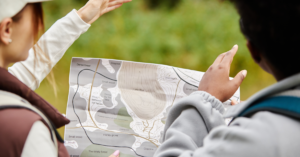
Practical example:
Download the trail map before leaving home.
Pro Tip:
Never rely solely on mobile data.
12. Dress in Layers
Weather shifts quickly outdoors.
Layering system:
- Base layer (moisture-wicking)
- Mid layer (insulation)
- Outer layer (wind/rain protection)
Practical example:
Even in summer, pack a light jacket.
Pro Tip:
Avoid cotton — it retains moisture.
13. Keep Emergency Contacts Visible
Write emergency contacts on:
- A card in your backpack
- Your phone’s lock screen
Practical example:
Add a medical info ID on your phone.
Pro Tip:
Small preparation saves valuable time in emergencies.
14. Start Small, Build Confidence
Your first solo hike doesn’t need to be 15 kilometres.
Begin with:
- 3–5 km trails
- Clear paths
- Familiar locations
Pro Tip:
Confidence grows with experience, not distance.
15. Stay Mentally Present
Hiking alone is also about mental clarity.
Avoid:
- Constant phone use
- Loud music in both ears
- Distractions
Practical example:
Pause and observe your surroundings every 20 minutes.
Pro Tip:
Mindfulness improves awareness and safety.
Common Mistakes to Avoid: Tips for Hiking Alone Beginners
- Starting with a difficult trail
- Ignoring weather warnings
- Not informing anyone
- Underestimating water needs
- Hiking too late in the day
- Overpacking
- Panicking when slightly off-route
Most solo hiking problems happen due to poor planning, not bad luck.
Conclusion
Hiking alone isn’t about taking risks. It’s about preparation, awareness, and confidence.
With the right tips for hiking alone, you can enjoy peaceful trails, personal growth, and freedom — without unnecessary danger.
Start small. Plan well. Stay alert.
And remember — smart hikers are safe hikers.
If you’re new to outdoor adventures, explore more beginner-friendly travel guides on NewbieTravels to plan smarter and travel confidently.
FAQs: Essential Tips for Hiking Alone
Is hiking alone safe for beginners?
Yes, if you choose beginner-friendly trails, inform someone about your plan, carry essential gear, and follow basic safety precautions.
What should I carry for a solo hike?
Carry water, snacks, first aid kit, navigation tools, a power bank, layered clothing, and emergency contact details.
How do I avoid getting lost while hiking alone?
Stick to marked trails, download offline maps, and stop immediately if you lose direction instead of wandering further.
Is it better to hike alone or in a group?
Beginners often benefit from starting in groups, but hiking alone offers independence and self-confidence when done safely.