

If you’re wondering what to expect on your first flight, you are definitely not alone. Preparing for your first time in the air can feel like a mix of excitement, anticipation, and a little bit of overwhelm.
Maybe you’ve been binge-watching airport walkthroughs on YouTube, or perhaps you’ve reread your airline confirmation email three times already.
It is completely normal to worry about getting lost, missing your flight, messing up at the security checkpoint, or simply not knowing what to do once you step onto the plane.
One of the biggest reasons first-time travelers feel anxious isn’t because flying is dangerous it’s just because the environment is entirely unfamiliar. When we don’t know what comes next, our brains love to fill in the blanks with worst-case scenarios.
The good news? Airports operate on highly predictable, standardized systems. Airline staff help thousands of first-time travelers every single day, and most of the things people stress about never actually happen.
This comprehensive guide will walk you through every step of the journey from packing your bags at home to collecting your luggage after landing so you can travel with absolute confidence.
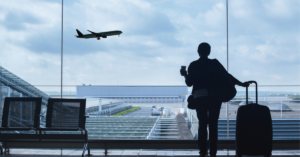
What to Expect on Your First Flight: Overcoming Travel Anxiety
Most people aren’t actually afraid of the physical act of flying. Instead, the travel anxiety usually stems from a fear of the unknown, such as:
-
Looking confused or out of place
-
Missing important audio announcements
-
Accidentally walking to the wrong gate
-
Getting held up at the security line
-
Not understanding basic airport procedures
“Think back to the very first time you got behind the wheel of a car. It felt incredibly stressful because you had to consciously think about every single movement. After a few weeks, it became completely automatic. Flying works the exact same way. Understanding your triggers can make a massive difference, so if you are feeling overwhelmed, it helps to learn more about managing travel anxiety symptoms before you head out.“
Millions of people navigate airports successfully every day, and the entire infrastructure is intentionally designed to guide you seamlessly from point A to point B.
1. Pre-Trip Preparation: What to Expect on Your First Flight Before Leaving Home
A smooth airport experience starts the night before your flight departure. Taking a few deliberate steps at home eliminates rushing and last-minute panic.
First-Time Flyer Document Check: What to Expect at Check-In
-
For Domestic Flights: A government-issued photo ID (like a driver’s license or passport) and your boarding pass.
-
“For International Flights: A valid passport, necessary travel visas, your boarding pass, and any required travel insurance documentation. To ensure you don’t leave anything vital behind, review this complete international travel documents checklist while packing.“
What to Expect with Airline Online Check-In Procedures
Most airlines open online check-in 24 to 48 hours before departure. It is highly recommended to do this via the airline’s website or mobile app. Checking in early allows you to secure a better seat, bypass the longest airport check-in lines, and save a digital boarding pass directly to your smartphone.
What to Expect When Packing Your Carry-On Luggage
Always keep your absolute essentials in your carry-on bag rather than your checked luggage. Packing essentials include your passport, medications, phone charger, valuables, and travel documents. If your checked suitcase happens to get delayed, you will still have everything you need to stay comfortable.
| Essential Carry-On Item | Why You Need It |
| Travel Documents & ID | For quick access at security and boarding gates. |
| Prescription Medication | Never risk losing vital health items in checked bags. |
| Phone & Charger | Keeps you connected; airport charging ports are widely available. |
| Headphones | Perfect for in-flight entertainment and blocking out noise. |
| Empty Water Bottle | Bring it empty through security, then fill it up at a water station. |
| Light Jacket or Sweater | Airplane cabins are notorious for running cold. |
2. Arriving at the Terminal: What to Expect at the Airport on Your First Flight
For most beginners, navigating the airport terminal feels more intimidating than the actual flight. The secret weapon to beating airport anxiety is simple: arrive early.
-
Domestic Airline Flights: Arrive at least 2 hours prior to scheduled departure.
-
International Airline Flights: Arrive at least 3 hours prior to scheduled departure.
Giving yourself this time cushion accounts for traffic, long check-in lines, and security delays. It turns a stressful sprint into a relaxed stroll.
Airport Directions: What to Expect When Finding Your Airline Counter
When you arrive at the airport, look at the overhead signs or digital departure boards. Look up your flight number to find your airline’s specific check-in desks.
Baggage Drop: What to Expect on Your First Flight with Checked Bags
If you are traveling with large suitcases, head to your airline’s counter. The agent will weigh your luggage, attach a routing tag, and send it off to the aircraft. If you didn’t check in online, this is also where the agent will print your physical boarding pass.
Gate Verification: What to Expect Regarding Flight Schedules and Gate Info
Before walking away from the counter, look at your boarding pass and look at the nearest digital flight information screen to confirm your gate number and boarding time.
3. TSA Checkpoint Guide: What to Expect on Your First Flight at Airport Security
This is the part of the airport process that first-time flyers worry about the most, but it is actually a highly routine, step-by-step security screening procedure.
Security Screenings: What to Expect at the Inspection Line
-
Show Your ID: Present your boarding pass and identification to the security officer.
-
Use the Plastic Trays: Grab the plastic bins provided and place your items inside.
-
Take off your jacket, belt, and heavy shoes (if required by local regulations).
-
Empty your pockets completely (keys, phone, wallet, loose change).
-
Remove large electronics, like laptops or tablets, from your bag and place them flat in a bin.
-
Place your carry-on bag directly onto the conveyor belt.
-
-
Walk Through the Body Scanner: Wait for the security officer to motion you forward through the metal detector or body scanner.
-
Collect and Repack Your Belongings: Once through, grab your items from the conveyor belt, move to the designated seating area to put your shoes and belt back on, and repack your bag calmly.
Pro Tip: Airport security staff are there to maintain safety and keep the line moving. If you are ever unsure whether to take an item out of your bag or leave your shoes on, just ask!
4. Locating Your Gate: What to Expect on Your First Flight During Plane Boarding
Once you are past security, you are officially in the departures lounge. Follow the overhead signs corresponding to your specific gate number.
Because gates can sometimes change at the last minute, make it a habit to check the digital departure screens every half hour, or download your airline’s app to get real-time gate notifications. Once you locate your gate, you can grab a snack, use the restroom, or just relax.
Boarding Groups: What to Expect at the Departure Gate
Boarding usually begins 30 to 45 minutes before departure. Airlines board aircraft in structured phases called “zones” or “groups” to prevent crowding.
-
Listen for gate announcements or watch the screens at the gate desk.
-
When your specific group or zone is called, line up and show your boarding pass to the gate agent.
-
Walk down the jet bridge and step onto the aircraft.
Finding Your Seat: What to Expect When Entering the Airplane
Look at your boarding pass for your row and seat letter (e.g., Row 14, Seat A). The row numbers are clearly labeled beneath the overhead compartments.
-
Seats A and F are almost always window seats.
-
Seats C and D are almost always aisle seats.
-
The remaining letters are the middle seats.
Stow your larger carry-on suitcase in the overhead bin above you, and place smaller personal items (like a backpack or purse) completely under the seat directly in front of you. Sit down, buckle your seatbelt, and settle in!
5. Up In the Air: What to Expect on Your First Flight During Takeoff and In-Flight Service
Flight Sensation: What to Expect During the Takeoff Climb
As the plane moves onto the runway, the engines will rev up, and you will feel a strong sensation of forward acceleration pushing you back slightly into your seat.
When the aircraft lifts off the ground, your stomach might feel a brief, mild sensation similar to driving over a sharp hill or riding an elevator. As the plane climbs, the changing air pressure will likely cause your ears to “pop.” You can easily relieve this by swallowing, yawning, or chewing a piece of gum. All of these physical sensations are completely normal.
Cabin Amenities: What to Expect from In-Flight Food and Drinks
Once the plane reaches its cruising altitude, the pilot will turn off the “Fasten Seatbelt” sign. At this point, you are free to use the onboard restrooms and stretch your legs.
Depending on the length of your flight, flight attendants will come down the aisle with a cart to offer complimentary water, drinks, or snacks. You can pass the time by reading, listening to music, watching movies, or simply resting.
Understanding Air Turbulence: What to Expect Regarding Airplane Shaking
Turbulence is easily the most misunderstood aspect of flying. To put it simply, turbulence is just unstable air.
Think of it exactly like hitting a few bumps or potholes on a paved road while driving a car. Modern aircraft are engineered to handle incredible amounts of turbulence with total safety. You might feel some minor vibrations, small shakes, or gentle drops. When it happens, just tighten your seatbelt and remember that it is entirely routine.
6. The End of the Journey: What to Expect on Your First Flight Upon Landing
Runway Touchdown: What to Expect During Aircraft Landing and Descent
When it is time to land, the pilot will announce the descent, and the plane will gradually lower its altitude. You will feel your ears adjusting to the pressure change again.
As the plane touches down on the runway, you will hear a loud thud as the wheels make contact, followed by the sound of the engines roaring as they help brake and slow the aircraft down.
Baggage Claim: What to Expect on Your First Flight at Arrivals
Once the plane comes to a complete stop at the terminal gate, wait for the seatbelt sign to turn off before standing up. Grab your overhead luggage carefully, exit the aircraft, and follow the terminal signs toward Arrivals or Baggage Claim.
If you checked a suitcase at the beginning of your journey, look at the digital screens in the baggage claim area to find the specific carousel assigned to your flight number. Wait for your bag to slide onto the carousel, grab it, and you are officially done!
Avoiding Beginner Mistakes: What to Expect on Your First Flight If Things Go Wrong
-
Cutting it Too Close on Time: Always give yourself an extra buffer. Rushing is the number one cause of travel anxiety.
-
Packing Essentials in Checked Bags: Never put passports, wallets, keys, electronics, or medications into luggage that goes underneath the plane.
-
Ignoring the Information Screens: Gates can change without notice. Keep an eye on the airport display boards.
-
Overpacking Your Carry-on Bag: Make sure your carry-on meets your airline’s specific size and weight limits so you aren’t forced to check it at the gate. Learning how to navigate these minor hurdles will help you stay completely clear of common first-time traveler mistakes.“
Summary Checklist: Exactly What to Expect on Your First Flight
Before Leaving Your House
-
Passport or government ID packed in an accessible pocket
-
Digital or printed boarding pass ready
-
Smartphone fully charged
-
Essential medications and chargers packed in carry-on
-
Luggage tags attached to all bags
-
Flight status checked online
At the Airport Terminal
-
Locate airline check-in counter
-
Drop off checked baggage and collect luggage tags
-
Clear security checkpoint safely
-
Locate your departure gate
-
Double-check flight info screens for gate changes
Inside the Airplane Cabin
-
Store bags properly (overhead bin or under the seat)
-
Fasten your seatbelt securely
-
Turn your phone and electronics to Airplane Mode
-
Sit back, relax, and enjoy your first flight!

Conclusion: Why What to Expect on Your First Flight is Simpler Than You Think
The biggest surprise for most first-time flyers is just how ordinary and routine the entire process feels once you are actually doing it. Every seasoned world traveler was once a nervous first-timer standing exactly where you are today.
The confidence you are looking for doesn’t magically appear before you travel it is built by taking the journey step by step. Arrive early, follow the signs, and trust the process. A few hours after takeoff, you will likely find yourself saying what millions of travelers have said before you: “That was so much easier than I thought it would be!”
Frequently Asked Questions (FAQ) About What to Expect on Your First Flight
1. Is flying scary the first time?
It can feel intimidating because it’s a brand-new experience, but most first-time travelers discover that the actual sensation of flying is much calmer and smoother than they anticipated.
2. How early should I really get to the airport?
The golden rule is 2 hours early for domestic flights and 3 hours early for international flights. This ensures you never have to rush through security.
3. What if I get lost or don’t know where to go inside the airport?
Airports are filled with highly visible signs pointing toward gates, restrooms, and exits. If you ever feel lost, simply walk up to any airline employee or airport security officer helping travelers find their way is a standard part of their job.
4. What does airplane takeoff feel like?
You will feel a strong, steady push against your seat as the plane speeds up down the runway, followed by a slight upward tilt and a brief elevator-like sensation as the aircraft leaves the ground.
5. Can turbulence cause a plane to crash?
No. Turbulence is normal environmental behavior, akin to a boat riding over waves. Modern commercial airplanes are built to withstand forces far greater than any standard turbulence can produce.
6. Am I allowed to use my cell phone during the flight?
Yes! You can use your phone throughout the flight as long as it is switched to Airplane Mode before takeoff. You can still use it to listen to downloaded music, play offline games, or watch pre-downloaded movies.
7. What happens if I miss a loudspeaker announcement at the gate?
Don’t worry. Every vital piece of information including boarding groups, delays, and gate changes is updated instantly on the digital screens located throughout the gate area.


